Wake Up Wednesday
As lots of you will know, the internet has become such an integral part of our lives. There are so many advantages and benefits that go with this, but, yes there's always a but and it's a big BUT, it unfortunately isn't all good.
Please can I ask that you stay vigilant when it comes to your children using the internet, whether that's for searching for information, playing games or chatting to others. Things may NOT always be as they seem and it is your responsibility to ensure your children are safe online.
We take a huge responsibility also for keeping your children safe. We implement this through our online safety lessons through our PSHE curriculum on a regular basis across all year groups, as well as specialist awareness days. This is to ensure your children are using their devices and the internet safely but also with the awareness of what to do if they feel unsafe or come across something that makes them uncomfortable.
The National Online Safety (NOS) Campaign provides guides for parents as part of their #WakeUpWednesday campaign and it is viewed as one of the most trusted and reputable learning resources in the UK, providing expert advice on the latest platforms and online risks that parents and carers need to know about.
There are lots of these guides on the previous page under, Internet Safety, but you can also find them here and on social media platforms by typing #WakeUpWednesday
We encourage children to ALWAYS talk to a trusted adult if they have any worries or concerns, so please can we ask that you do the same. If you have any concerns regarding the internet or use of devices, please come to speak to us. If you have any information on inappropriate games etc, then let us know so we can share it on here to make others aware.
Thank you for your continued support,
Mrs Michelle Fox
Learning Mentor/DSL
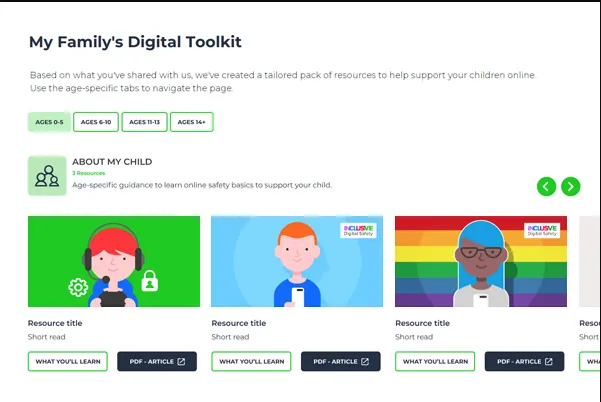
My Family's Digital Toolkit
Internet Matters has a fantastic toolkit for parents which helps you to set up personalised online safety advice that keeps up with your child’s digital needs.
https://www.internetmatters.org/digital-family-toolkit/#inside-toolkit
- Get age-specific advice and tips to support your children online
- Learn about popular apps and platforms your children use
- Get information about how to deal with any online safety concerns
- Get recommendations for digital tools to support their interests and wellbeing
07/07/2026
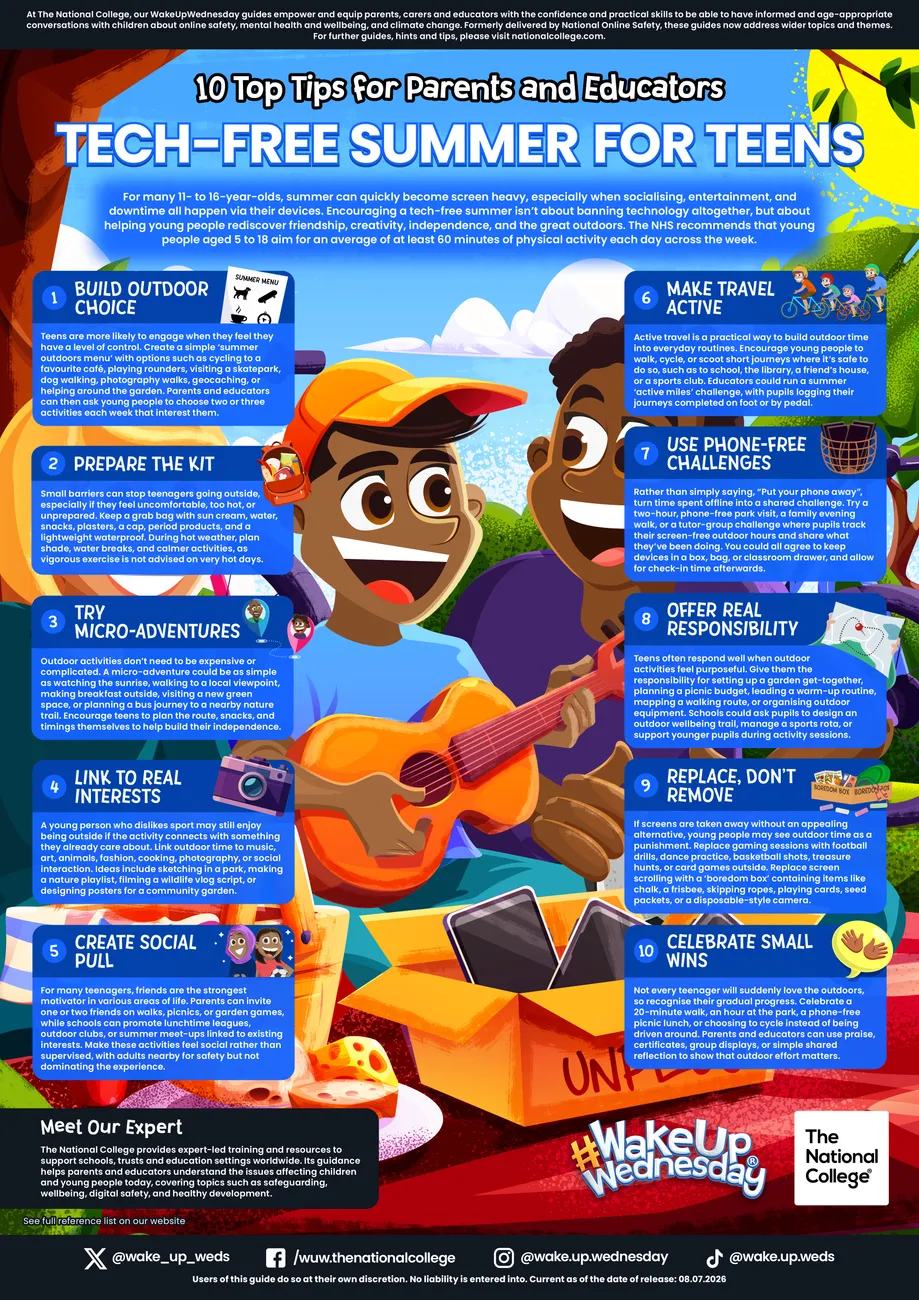
Tips for Tech Free Summer
For many young people, the summer holidays can easily become dominated by phones, gaming, streaming and social media. This guide offers reassuring, realistic advice for parents, carers and educators who want to encourage 11- to 16-year-olds to spend more time offline without making technology feel like the enemy.
From phone-free challenges and micro-adventures to active travel, outdoor clubs and creative alternatives to scrolling, the guide focuses on small, achievable changes. It also highlights the importance of giving teens choice, responsibility and social motivation, helping them build confidence, wellbeing and healthier habits throughout the summer.
29/06/2026
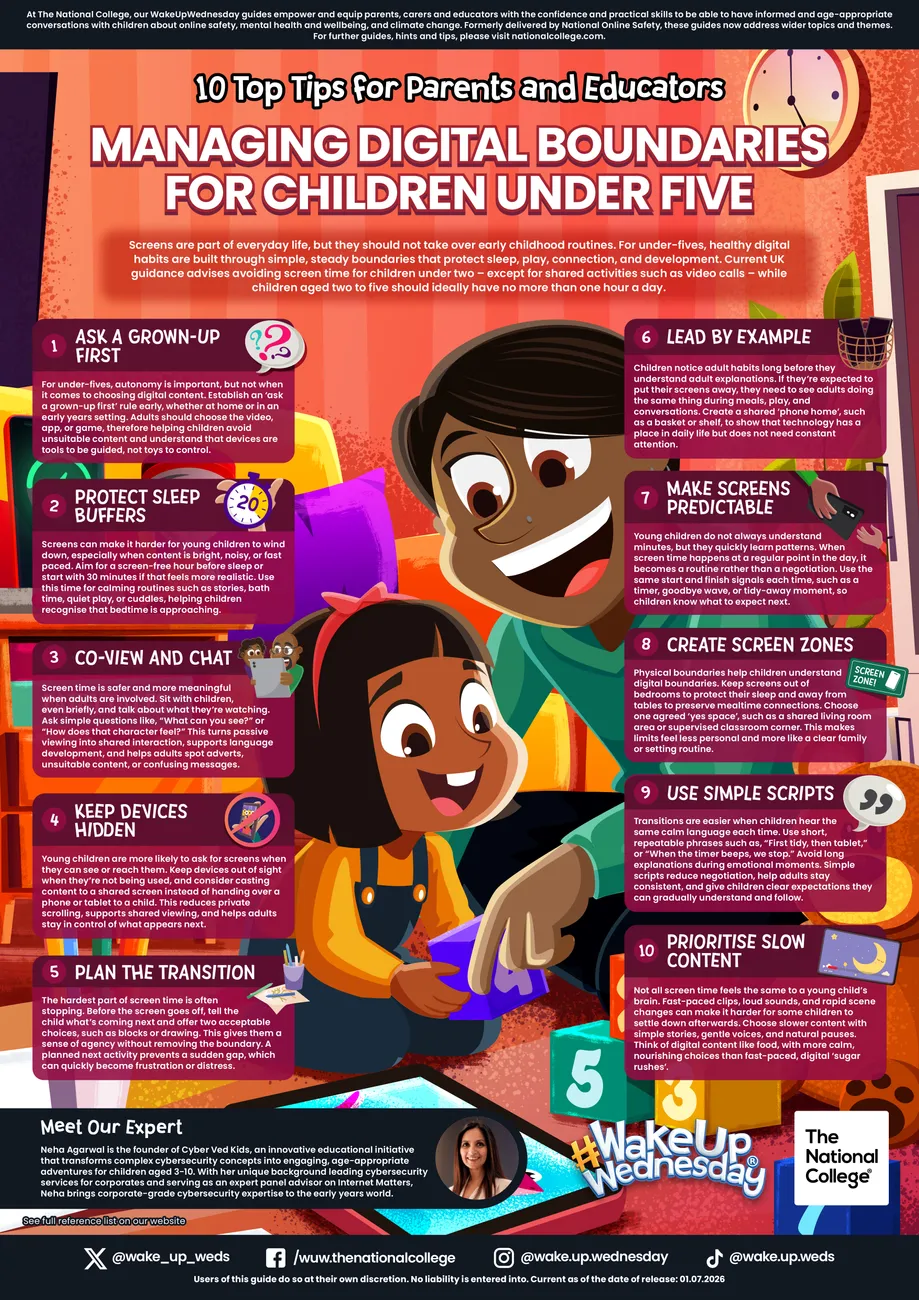
Digital Boundaries for under 5's
Screens are now part of daily life, but for very young children, simple and predictable boundaries can make a big difference. This guide explores how adults can help under-fives build healthier digital habits by choosing content carefully, keeping devices in shared spaces, protecting bedtime routines and making screen time feel calm rather than constant.
It also highlights the importance of adult involvement, from co-viewing and chatting about what children see to modelling balanced device use ourselves. With practical scripts, transition tips and age-appropriate routines, the guide offers supportive advice for families, nurseries and early years settings looking to manage screen time with confidence.
15/06/2026
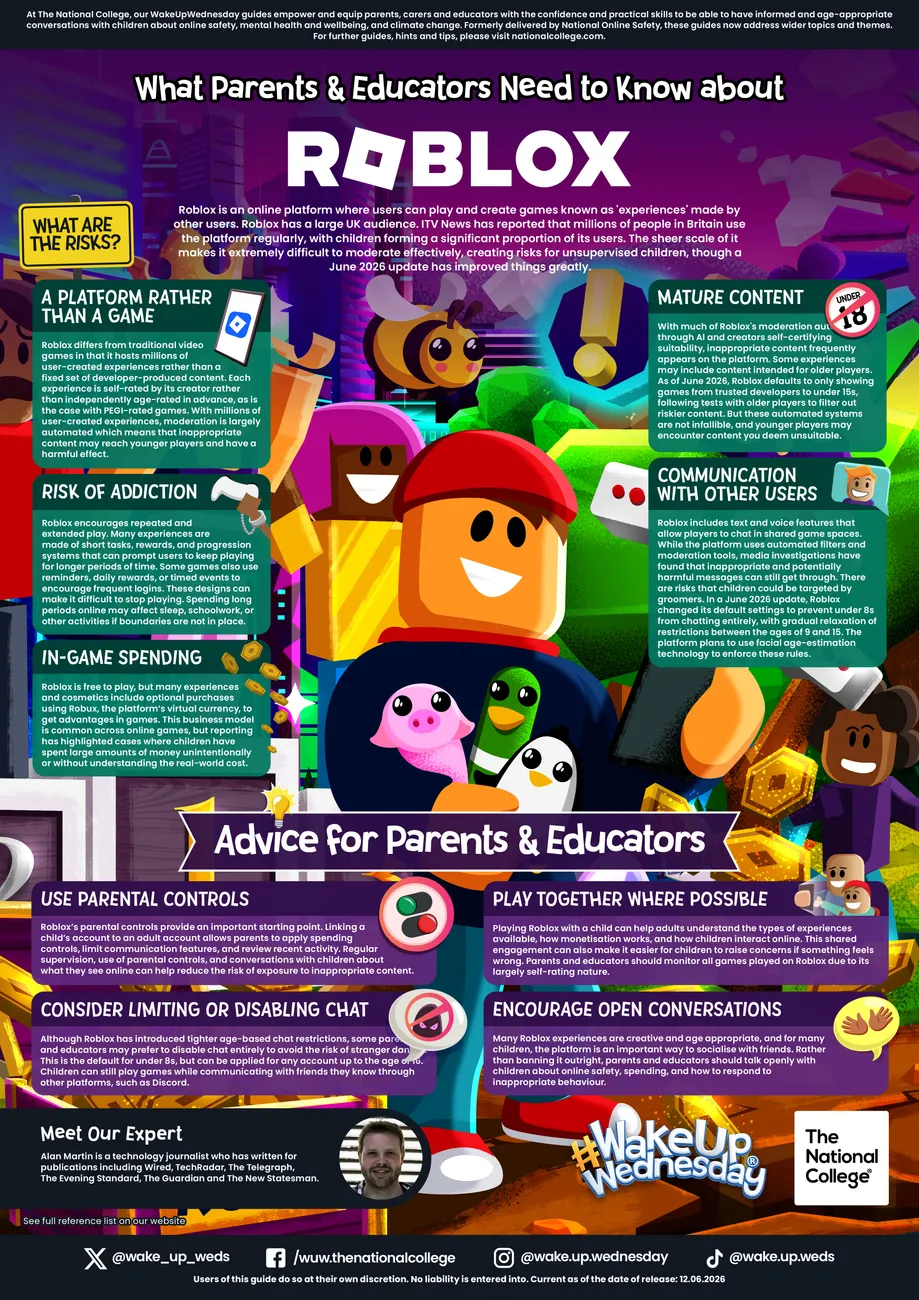
Roblox
Roblox is hugely popular with children, offering millions of user-created games and social experiences. This #WakeUpWednesday guide explains how the platform differs from traditional video games, and why its scale, self-rating system and automated moderation can expose young users to inappropriate content or unsafe interactions.
Aimed at parents and educators, the guide explores concerns including online communication, in-game spending and compulsive play. It also shares practical advice on parental controls, limiting chat and encouraging open conversations, helping adults support children to enjoy Roblox more safely and responsibly.
01/06/2026
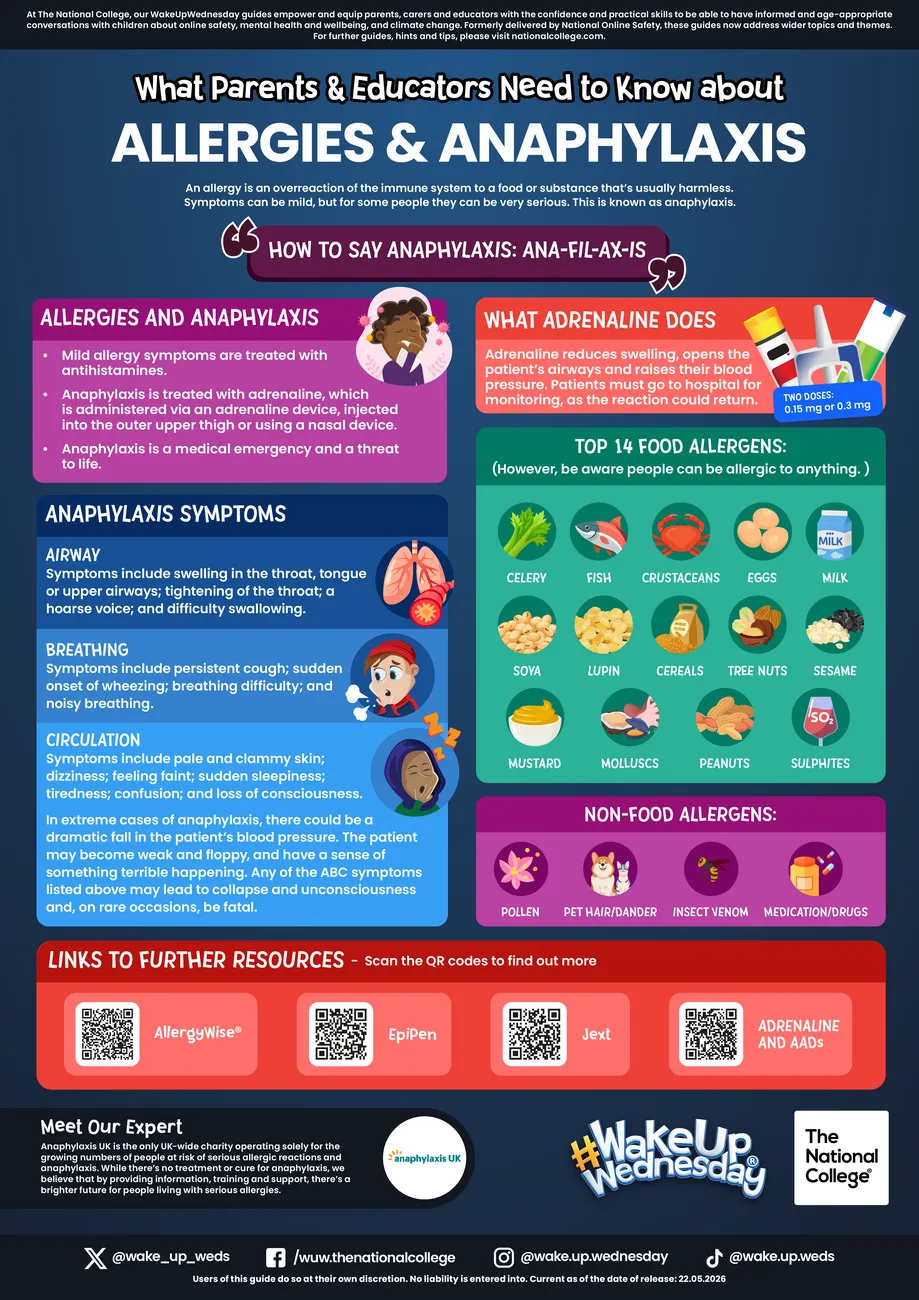
Allergies and Anaphylaxis
While many allergies result in only mild symptoms, some can be far more dangerous, causing life-threatening episodes of anaphylaxis that require swift intervention. This week’s guide helps break down the warning signs and outlines the immediate steps to take when every second counts.
It also provides a useful overview of the most common food allergens – from milk and eggs to shellfish and sesame – as well as common non-food triggers like insect venom, pollen, and medication. With clear guidance on recognising the symptoms of a serious reaction and the role of devices like auto-injectors, this resource can help adults feel more prepared and informed when supporting children with allergies.
18/05/2026
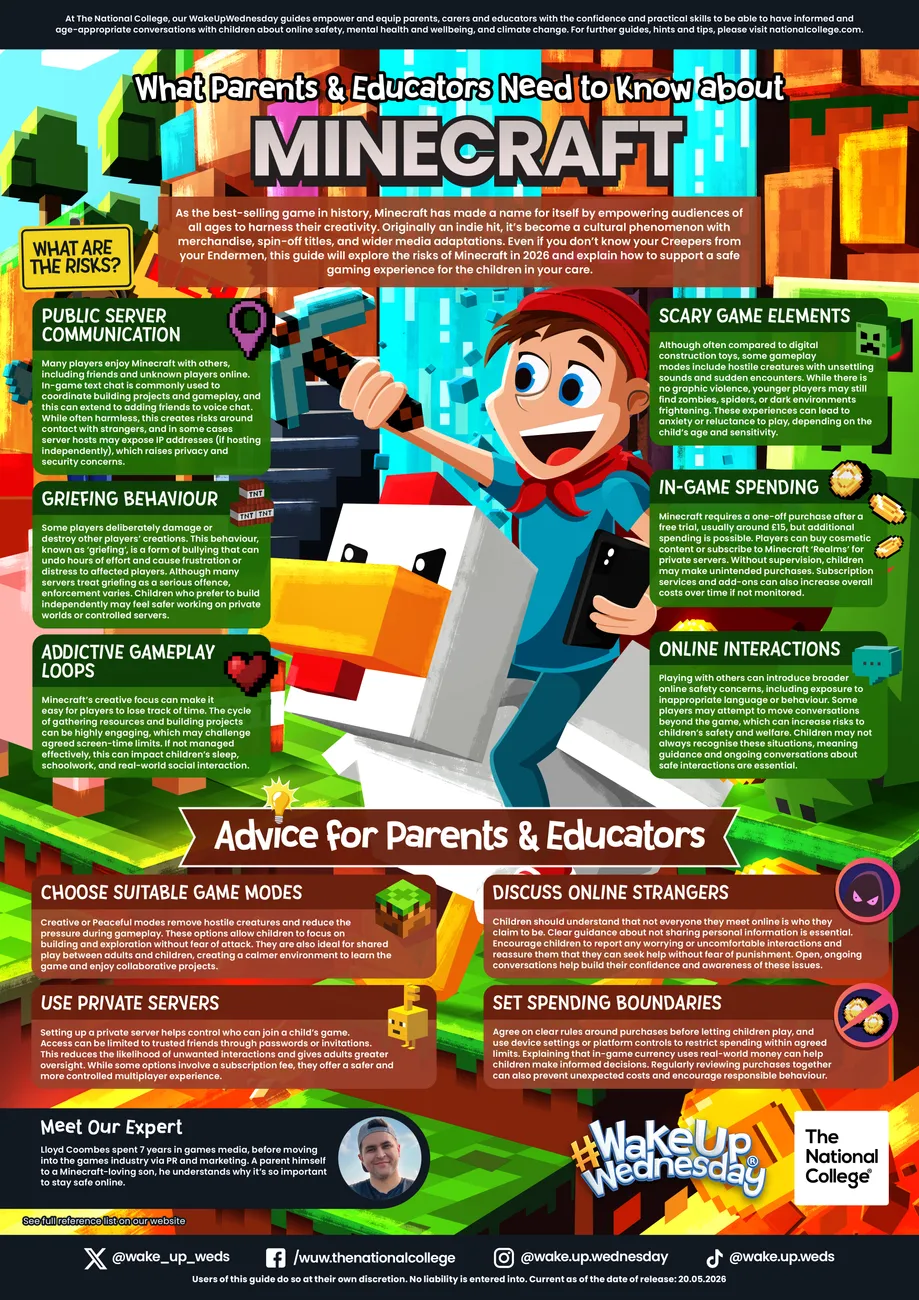
Minecraft
Minecraft remains hugely popular with young players, offering creative freedom and social interaction. This guide explores how features like public servers, in-game chat and multiplayer modes can introduce risks, including contact with strangers, exposure to inappropriate behaviour and privacy concerns linked to independent server hosting.
It also highlights issues such as griefing, in-game spending and potentially addictive gameplay loops. With clear, actionable advice, the guide helps parents and educators set boundaries, choose safer settings and support children in enjoying Minecraft responsibly while staying protected online.
11/05/2026
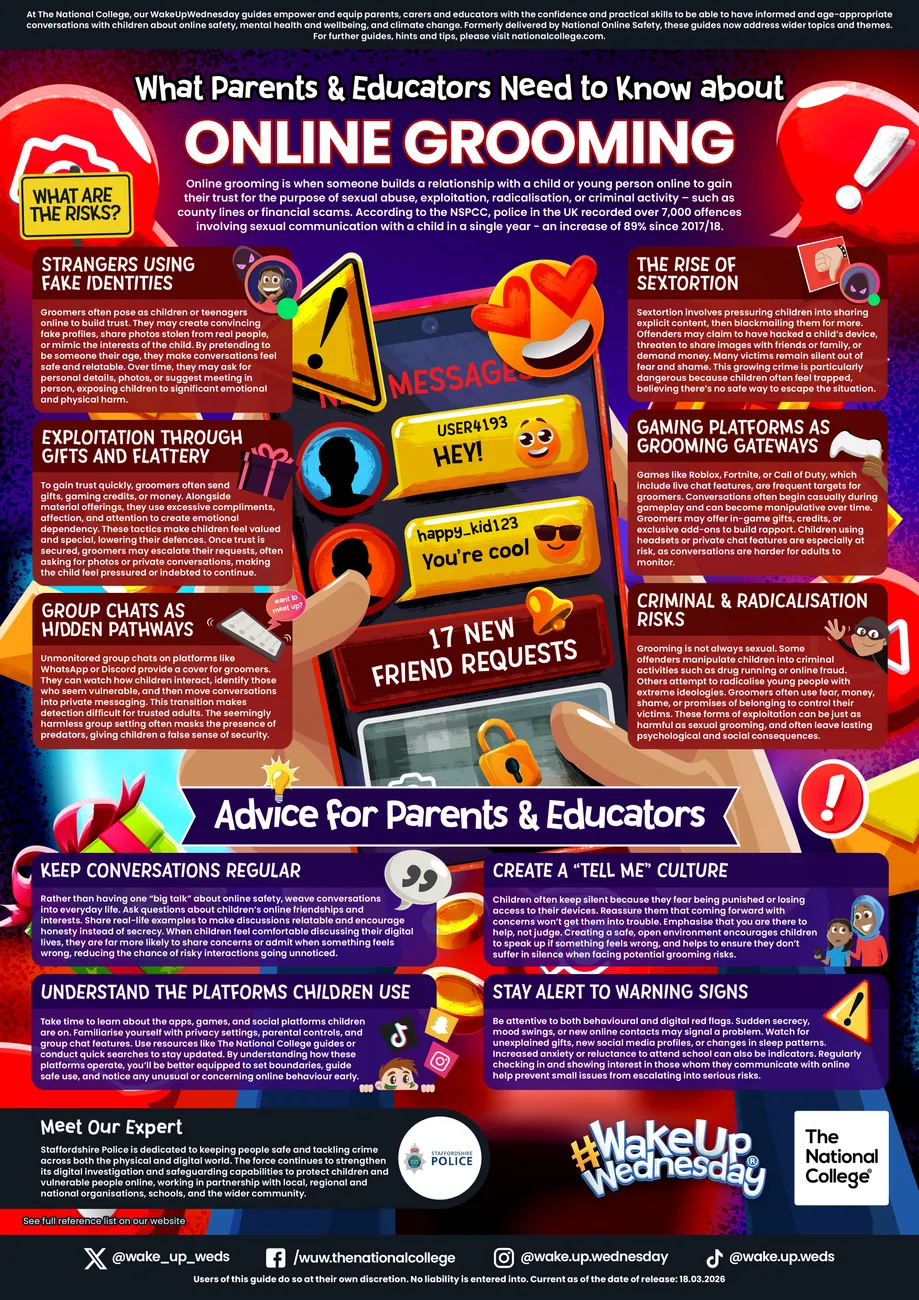
Online Grooming
Online grooming is a growing and deeply concerning threat, with thousands of offences recorded each year in the UK. This edition explores how offenders build trust with children through fake identities, flattery, gifts and group chats before exploiting that relationship. It also examines the rise of sextortion and how gaming platforms and social media can become gateways for harm.
Beyond sexual exploitation, the guide highlights criminal grooming and radicalisation, helping adults recognise that manipulation can take many forms. With practical advice on spotting warning signs, creating open conversations and understanding the platforms children use, this resource empowers parents and educators to intervene early and keep young people safer online.
04/05/2026
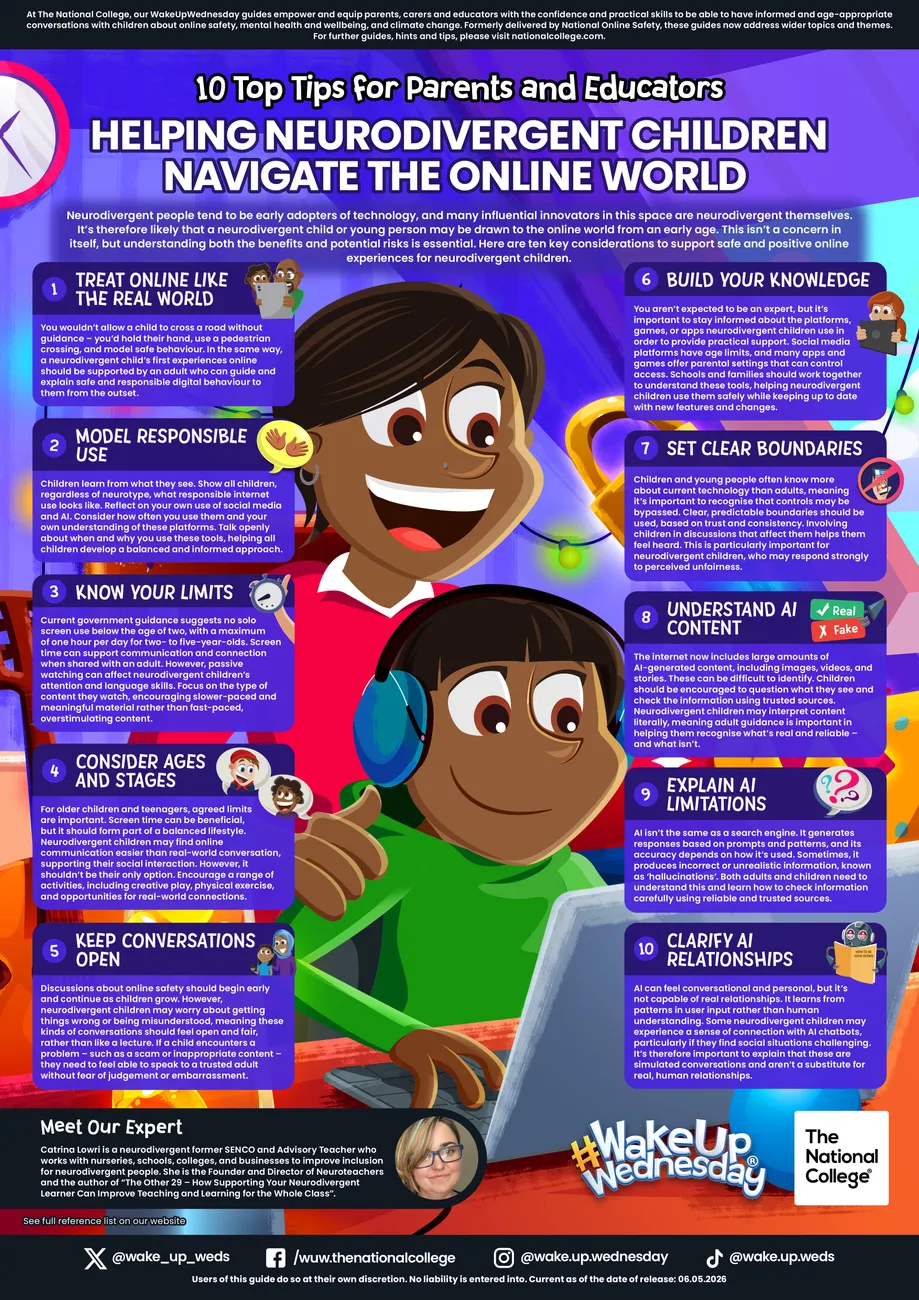
Helping neurodivergent children navigate the online world
Neurodivergent children are often drawn to technology, so early, supported experiences online are key. This guide explores how adults can model positive digital behaviour, set age-appropriate limits and create open, judgement-free conversations about online safety. It also highlights the importance of balancing screen use with offline activities to support wellbeing and development.
It also unpacks emerging challenges, including AI-generated content and the blurred lines between real and simulated interactions. With clear, practical advice on boundaries, critical thinking and safe communication, this guide helps educators and families build confidence in supporting neurodivergent children to navigate the digital world safely and responsibly.
13/04/2026
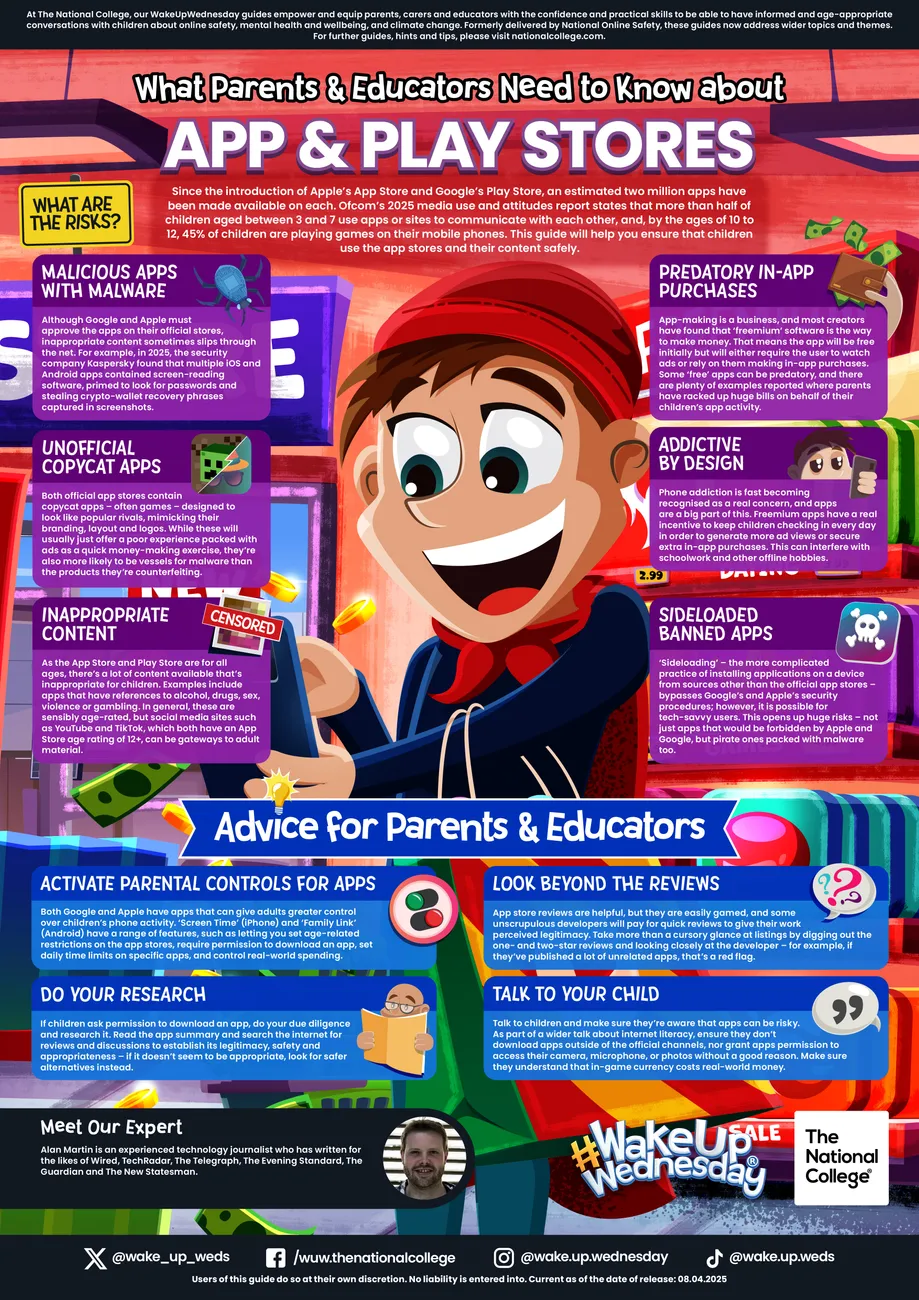
App and Playstore
With millions of apps available and children accessing them from an increasingly young age, app stores can present a range of risks. From malware and copycat apps to inappropriate content and persuasive in-app purchases, this guide highlights how easily young users can encounter issues – even when using official platforms.
It also offers clear, practical advice to help parents and educators manage these risks. From setting up parental controls and checking app credibility to having open conversations about safe usage, the guide supports adults in building children’s awareness, encouraging safer choices and promoting more balanced, responsible app use.
25/03/2026
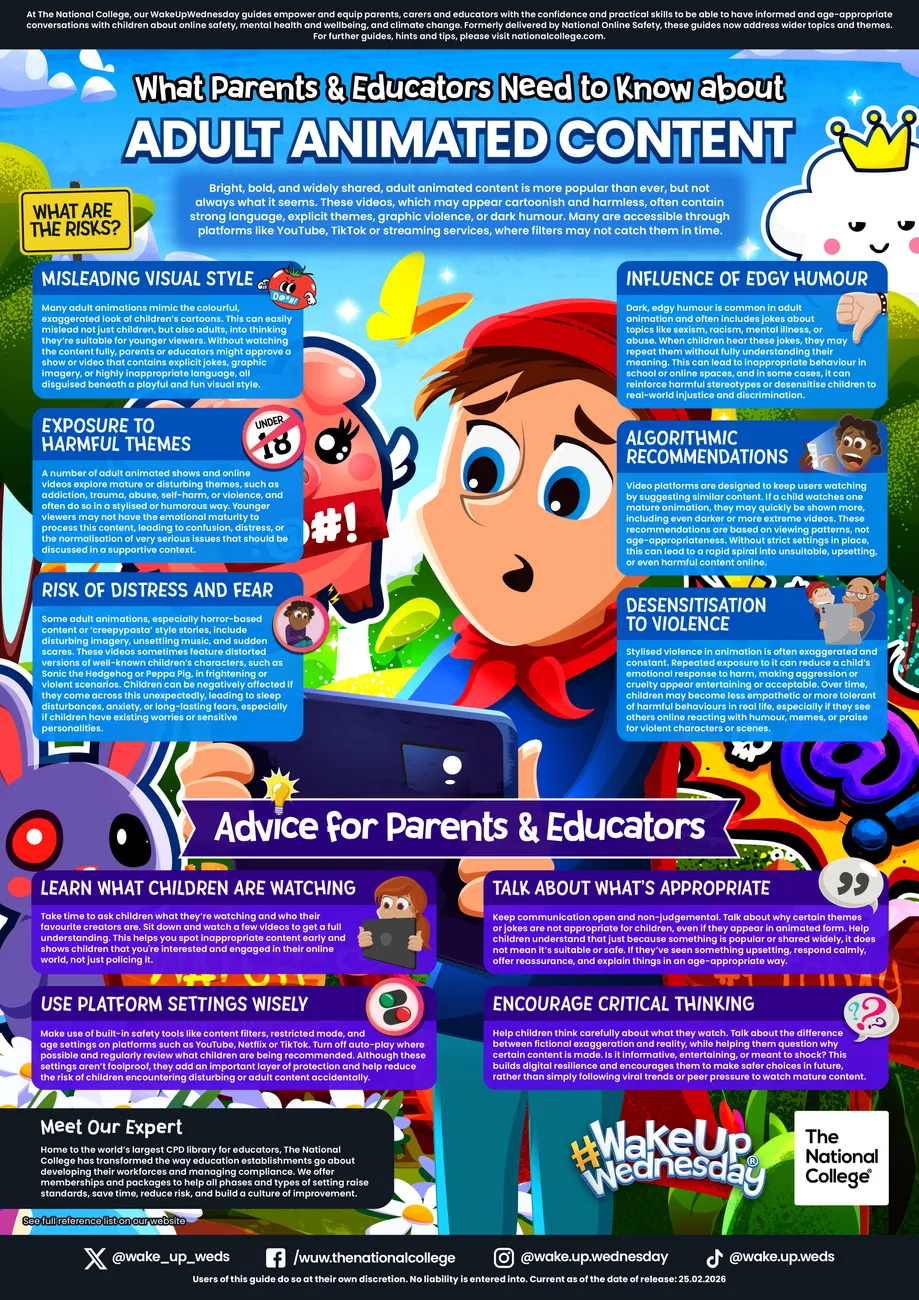
Adult Animated Content
Adult animated content is increasingly visible on platforms such as YouTube, TikTok and streaming services. While the bright visuals and cartoon style may seem harmless at first glance, many of these shows and clips are created specifically for mature audiences, featuring strong language, sexual references, graphic violence and unsettling themes.
This #WakeUpWednesday guide helps parents and educators understand the risks, from misleading visuals and algorithm-driven recommendations to desensitisation and edgy humour. It also offers practical advice on platform settings, open conversations and building children’s critical thinking, so young people can navigate online animation safely and confidently.
19/11/2025
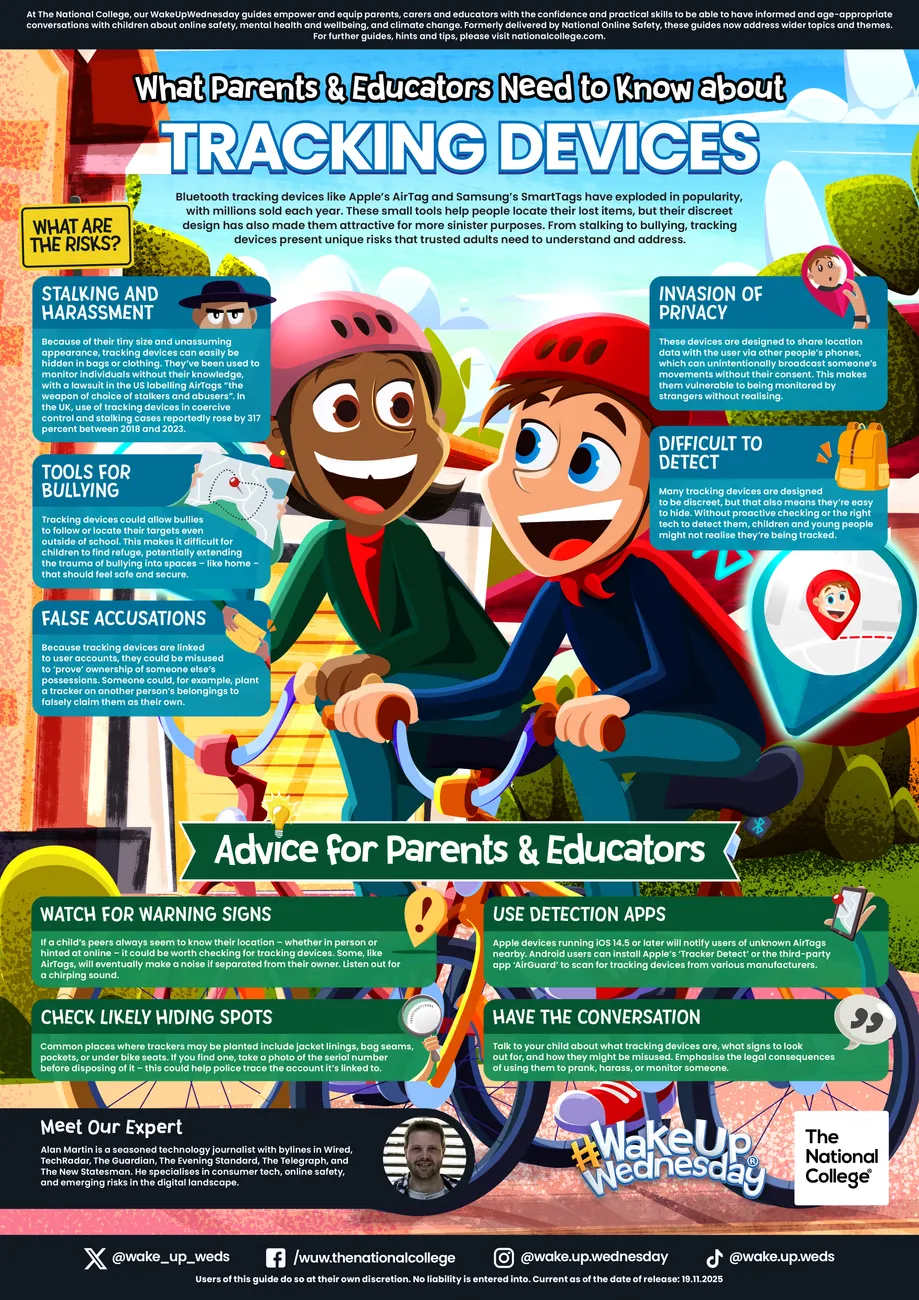
Tracking devices
Tracking devices like AirTags and SmartTags were designed to help people find lost belongings, but they’ve also opened the door to worrying forms of misuse. Their compact size and subtle design make them easy to hide, which can lead to the unwanted tracking of people without their knowledge. From stalking and bullying to potential misuse by peers, these gadgets bring a range of risks that trusted adults must stay aware of.
This guide examines the growing popularity of Bluetooth trackers, the most common ways they’re being misused, and how to spot signs that a child may be affected. With practical tips on detecting hidden devices, using the right apps, and starting important conversations, it’s a vital read for parents, carers and educators looking to stay ahead of a fast-moving issue.
12/11/2025
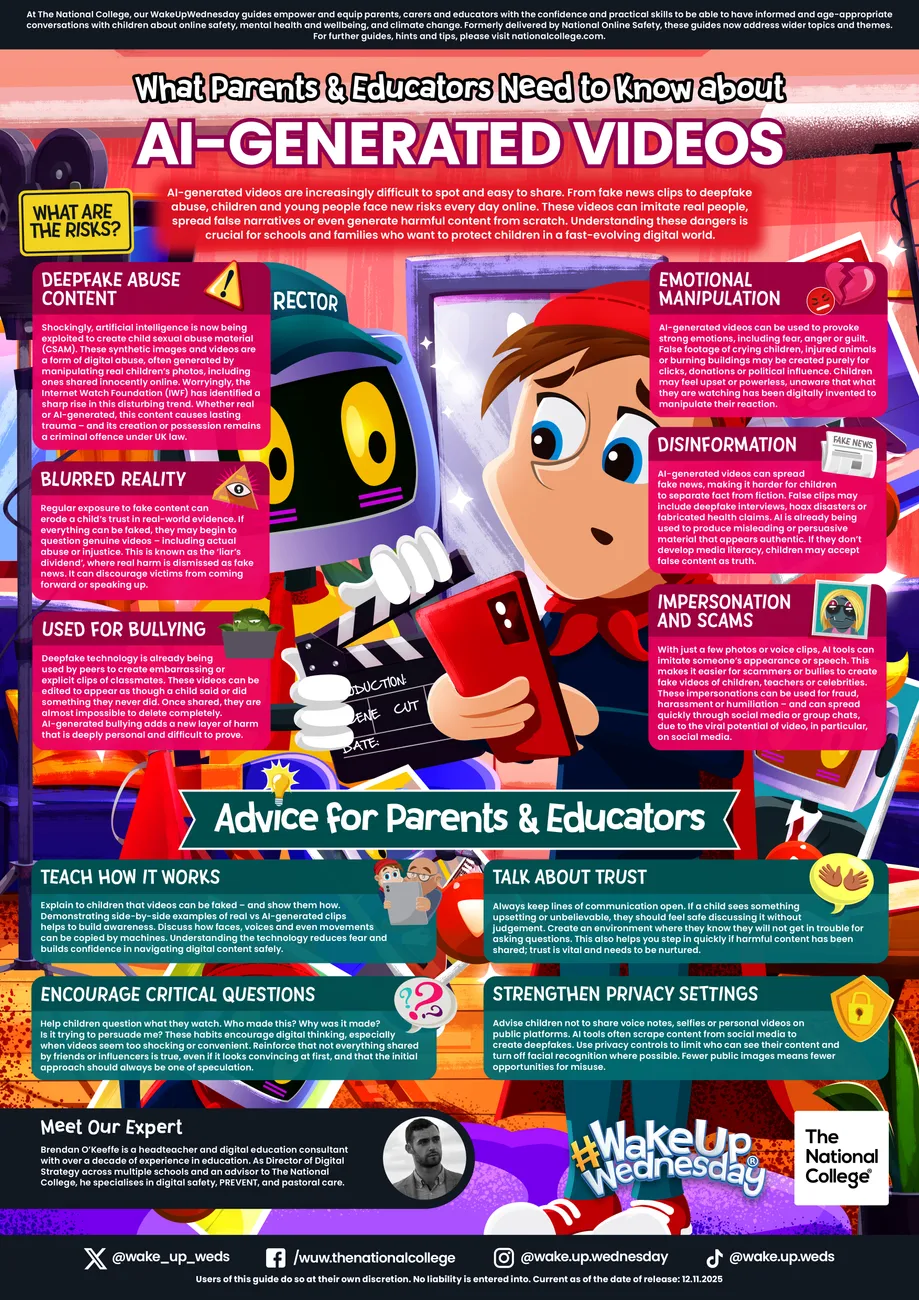
AI Generated videos
AI can now generate realistic looking videos that are almost impossible to distinguish from genuine content. From hoax news to abusive deepfakes, these synthetic clips can mislead, manipulate and even harm. As AI tools become more advanced, and more accessible, young people are increasingly at risk of encountering fake but convincing footage online. This #WakeUpWednesday guide unpacks the dangers of AI-generated videos, from the emotional impact of fake distressing content to the potential for impersonation and bullying. With practical tips to help young users spot deepfakes and navigate online spaces with confidence, this guide is an essential read for parents and educators navigating this rapidly evolving digital landscape.
5/11/2025
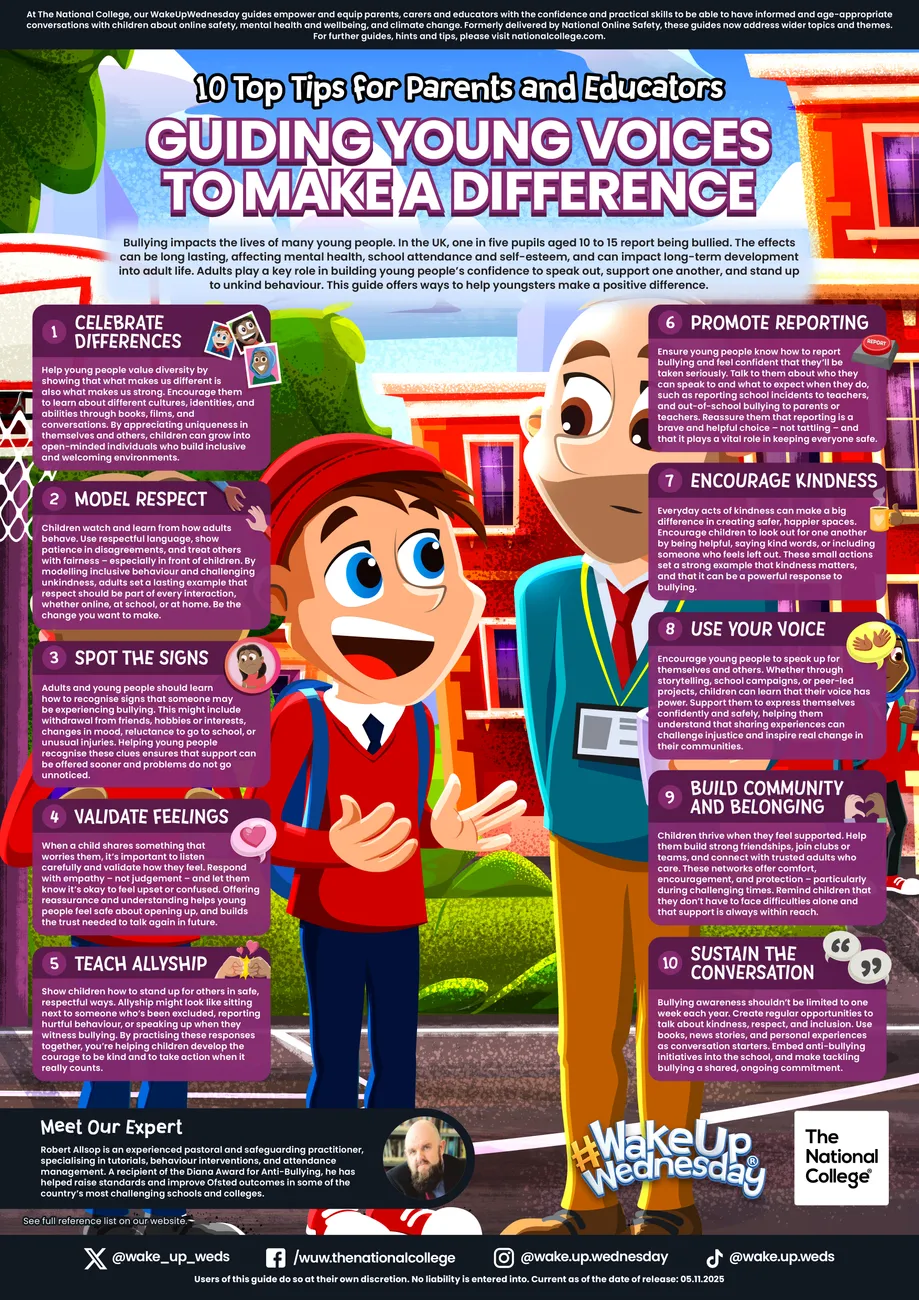
Guiding young voices
Bullying continues to affect far too many children, both in and out of school – but adults can play a crucial role in helping young people speak up and support one another. This week’s guide is packed with practical strategies to foster confidence, kindness, and connection in the face of unkind behaviour.
From encouraging inclusivity to spotting signs of distress, the guide highlights how small, everyday actions by young people and the adults around them can make a big difference. With tips on nurturing empathy, teaching allyship and validating children’s experiences, it’s a timely reminder that empowering young voices is key to positive change.
29/10/2025
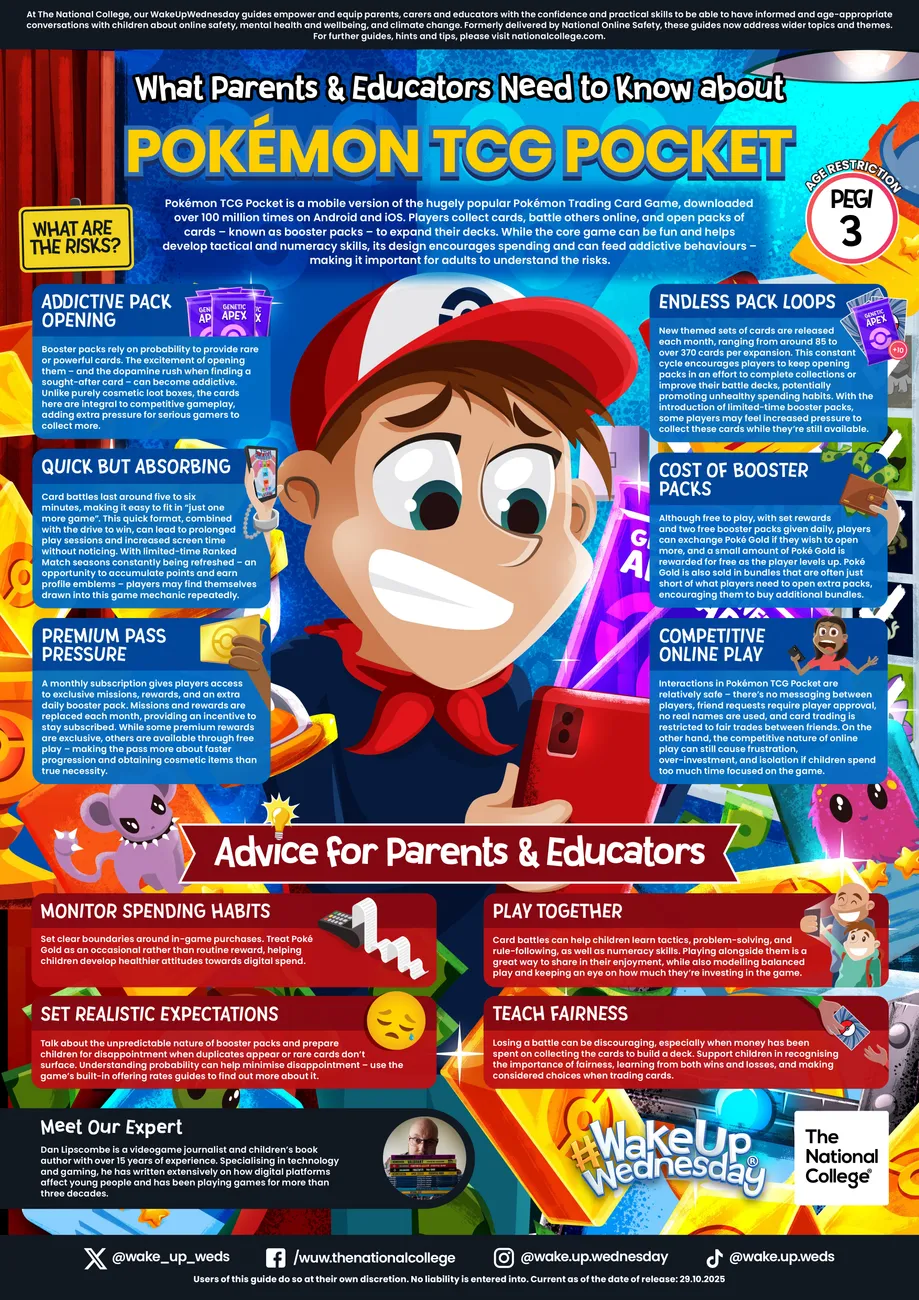
Pokémon TCG Pocket
Pokémon TCG Pocket has brought the world-famous trading card game onto smartphones – and with over 100 million downloads, it’s already captured the attention of countless fans. The app combines quick-fire card battles, collectible decks, and the thrill of opening booster packs. For many children, it’s a blend of strategy, fun, and Pokémon nostalgia that’s hard to resist.
Beneath the colourful exterior, there are risks that parents and educators should know about. In-game purchases, monthly passes, and limited-time expansions encourage ongoing spending, while the competitive online play may lead to frustration, over-investment, and extended screen time. This guide helps adults understand these hidden challenges.
22/10/2025
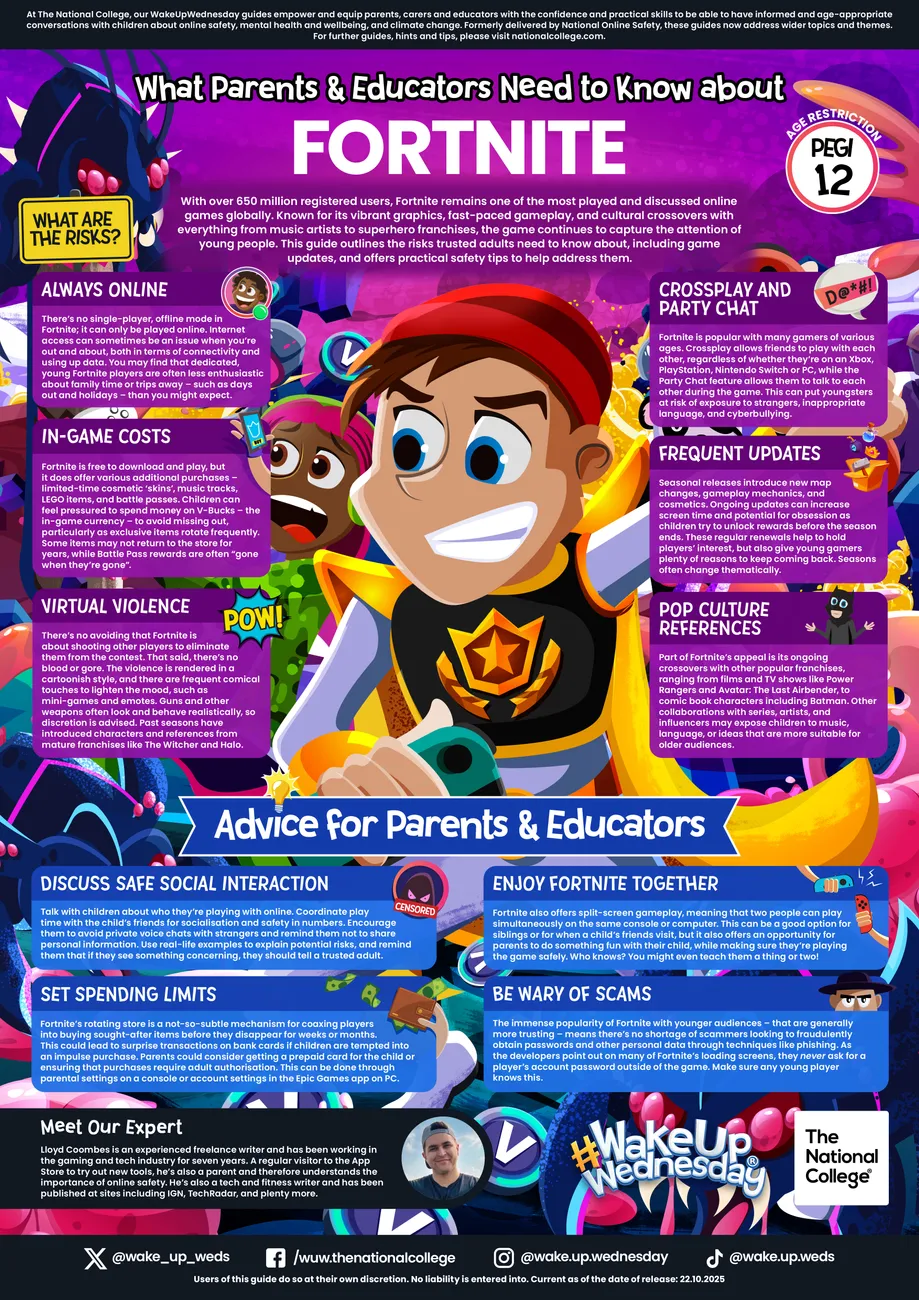
Fortnite
Fortnite continues to reign supreme in the gaming world, drawing in millions of players with its bold graphics, fast-paced action and constant stream of new content. This guide looks at the latest developments in the game – such as themed updates, crossover characters and limited-edition cosmetics – and what they mean for young players and the adults who support them.
It also unpacks some of the key online safety risks associated with Fortnite. With in-game purchases, cross-platform communication and regular seasonal updates creating an ‘always on’ experience, it’s vital that trusted adults understand how to help children and young people enjoy the game without being exposed to unnecessary risks.
15/10/2025
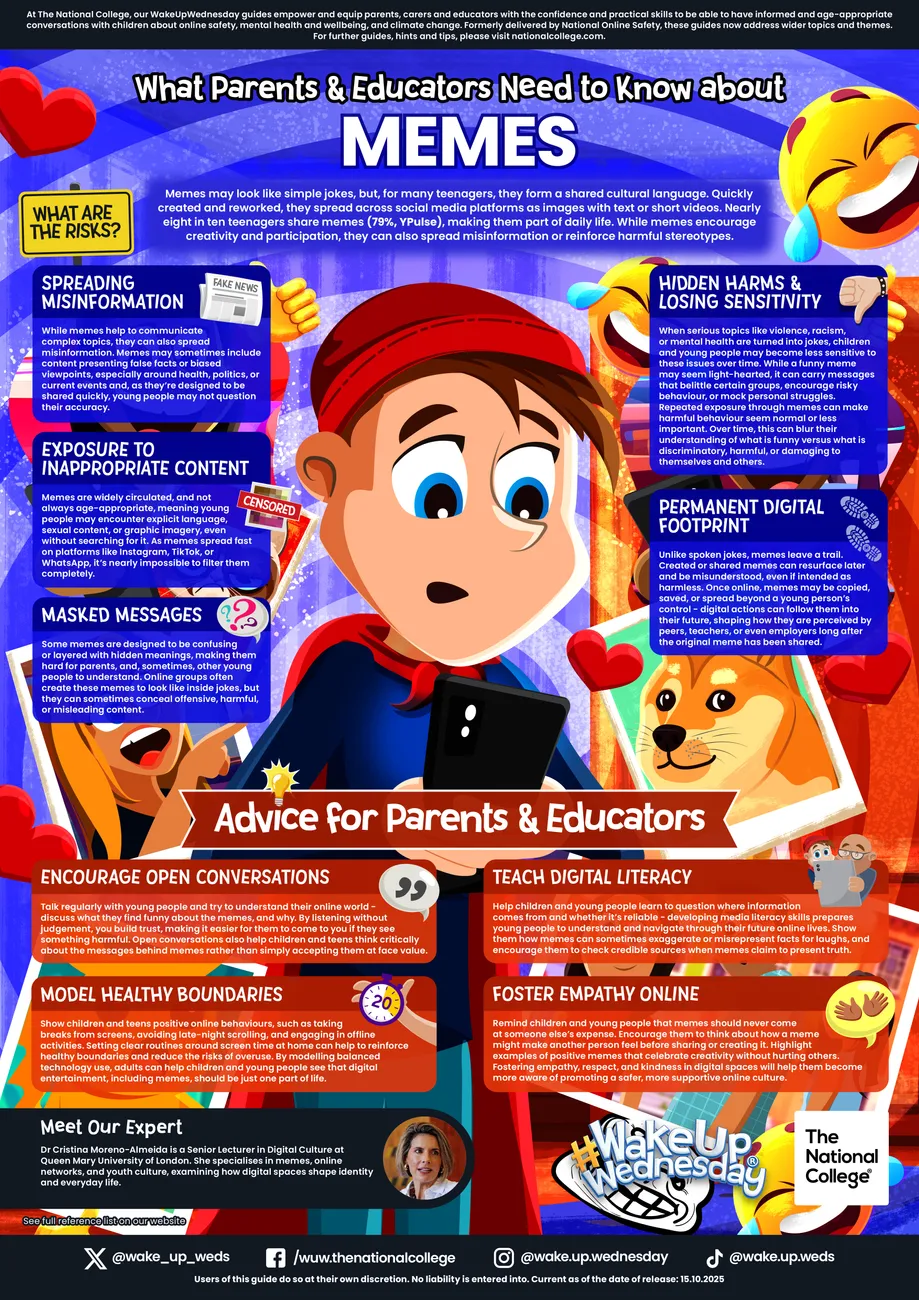
Memes
Memes are everywhere - quick, witty, and wildly shareable. For many young people they are more than jokes, they’re a way to connect, express themselves and interpret the world. But behind the humour, there can be risks. This guide helps adults understand how memes work and why they matter to young people today.
From misinformation to insensitive jokes and permanent digital footprints, this guide highlights the potential pitfalls of meme culture. With practical tips on digital literacy, empathy and open conversations, it empowers parents and educators to help children navigate online humour in a thoughtful, safe, and respectful way.
08/10/2025
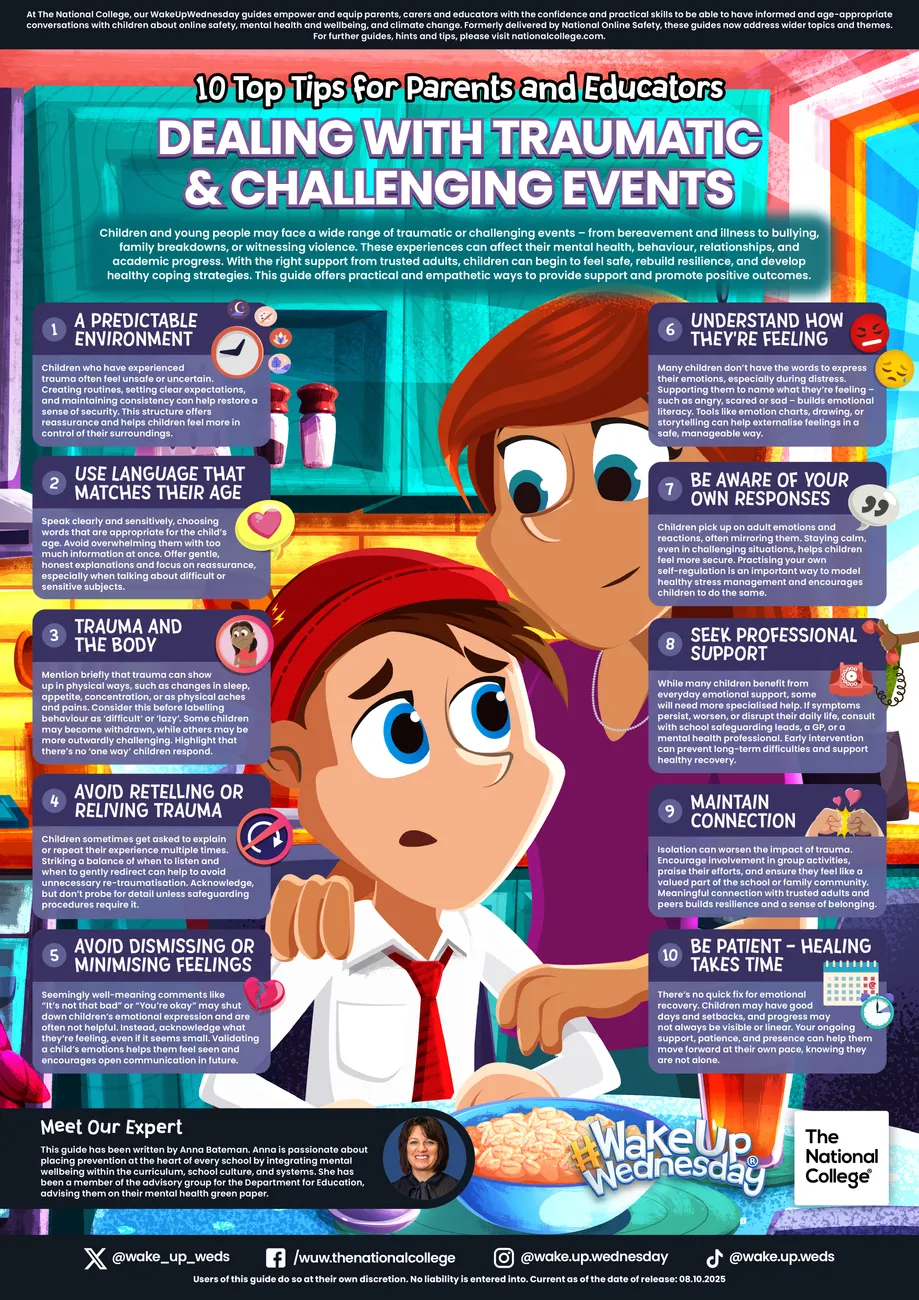
Dealing with traumatic & challenging events
When children and young people experience traumatic or difficult life events, their emotional world can be shaken, and the impact may show up in their behaviour, mood, or relationships. Whether it’s bereavement, a family breakdown or witnessing something distressing, the support of trusted adults can be key in helping them feel safe again. This guide looks at how to create a nurturing environment to help young people process difficult feelings.
It also shares clear, actionable strategies to promote recovery – from building emotional literacy and creating a predictable routine to recognising signs that further help may be needed. Sensitive language, patience, and presence all play a part in empowering children to move forward at their own pace. With the right support, they can rebuild a sense of security and resilience.
01/10/2025
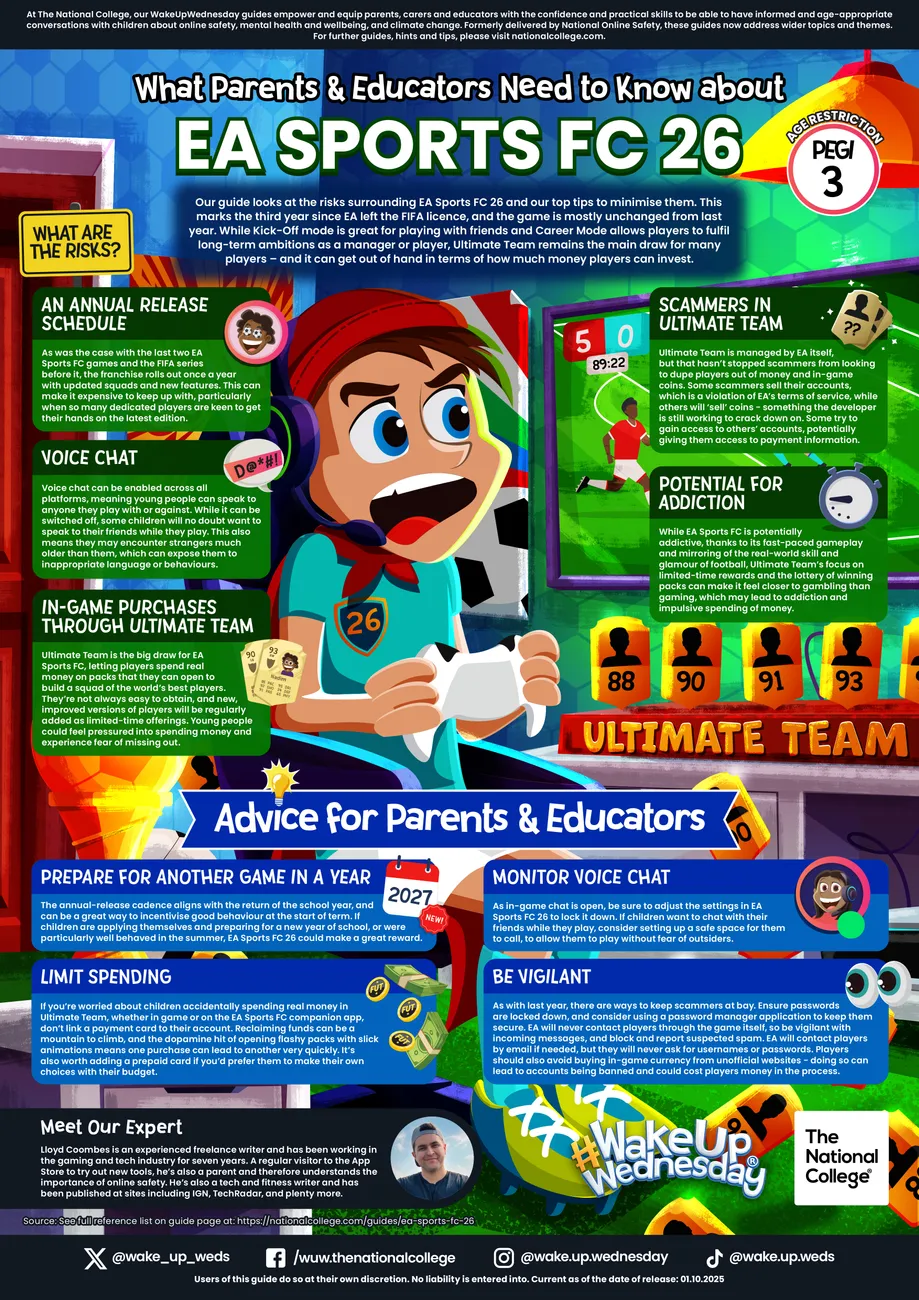
EA Sports FC 26
With new kits, updated squads and refined gameplay, EA FC 26 brings the thrill of top-tier football to living rooms once again. While it continues to offer family-friendly fun in modes like Kick-Off and Career, the ongoing popularity of Ultimate Team – where players spend money to build fantasy squads – brings a mix of excitement and risks.
Children can encounter issues such as gambling-like mechanics, voice chat with strangers, and potential exposure to scams. This guide breaks down the game’s most important features, highlights the key risks to be aware of, and shares practical advice for helping young players stay safe while gaming and interacting online.
24/09/2025
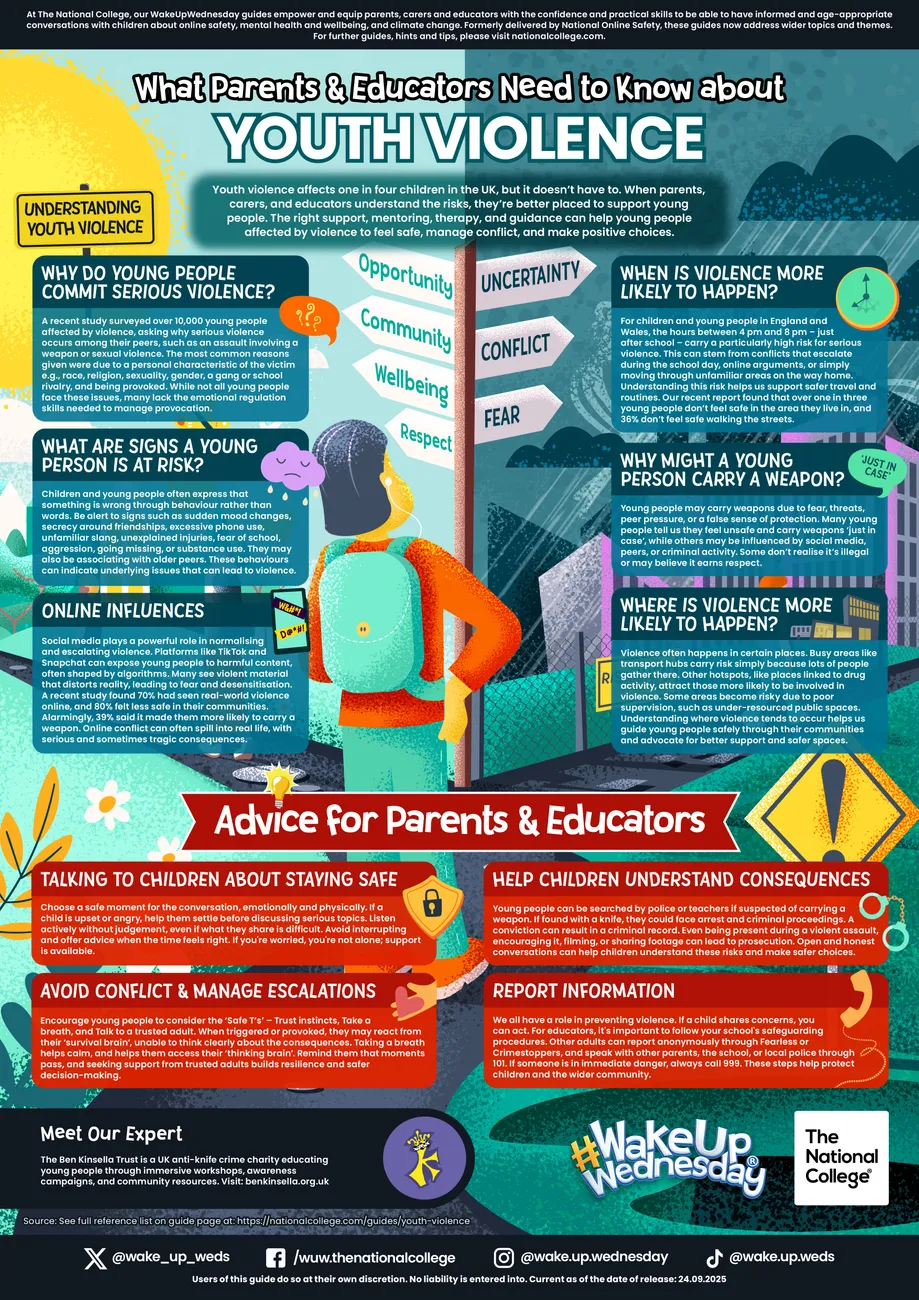
Youth Violence
Youth violence impacts 1 in 4 children and young people in the UK, yet many parents and educators feel unsure how to respond. This guide breaks down the causes, risks and warning signs of violent behaviour in young people, helping adults feel more confident in supporting those at risk.
Drawing on expert insights from the Ben Kinsella Trust, it explores why some young people may carry weapons, how violence is influenced by online content, and what time and locations pose the greatest risk. It also highlights the importance of early intervention, emotional support, and honest conversations.
17/09/2025
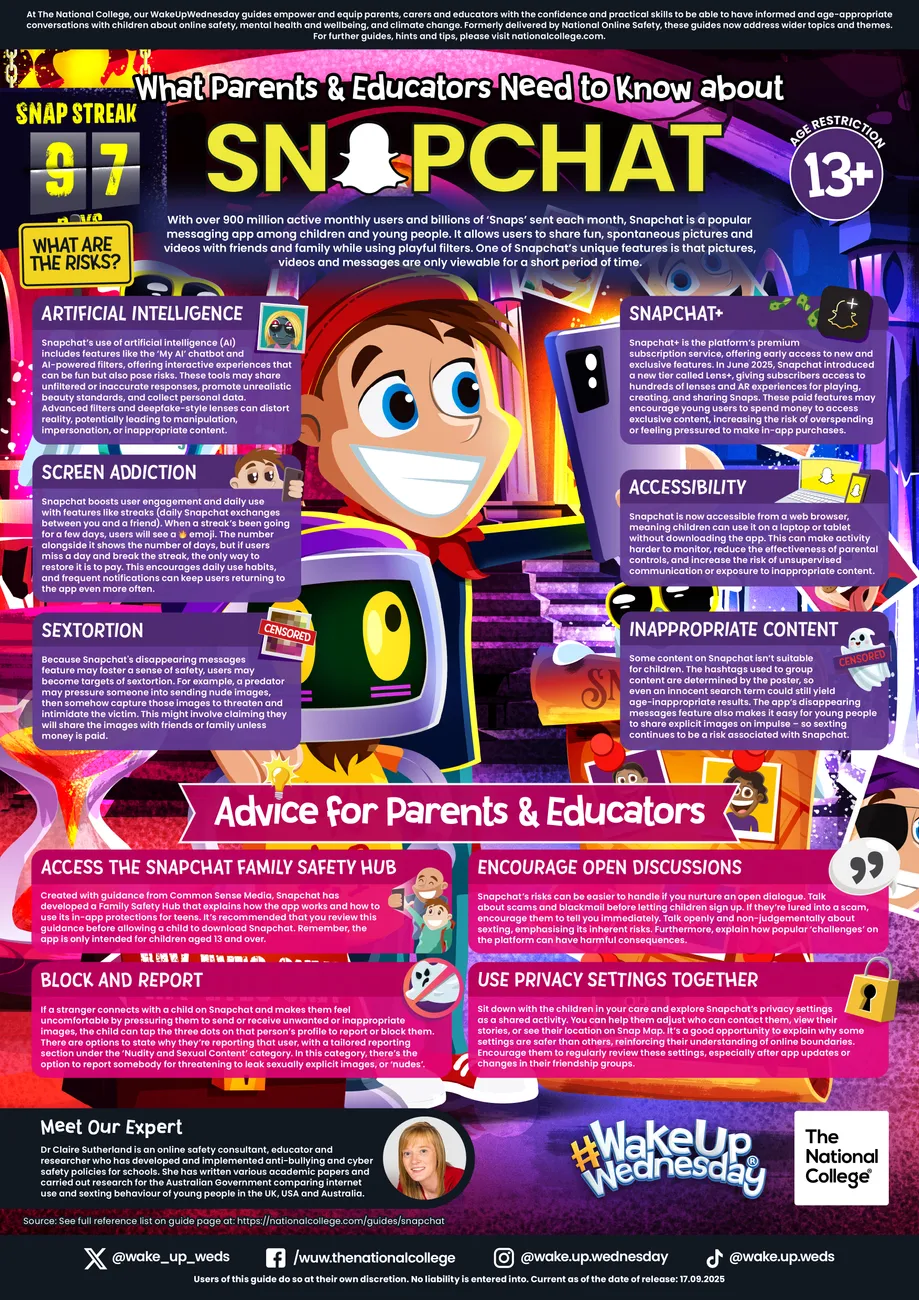
Snapchat
With over 900 million monthly users, Snapchat continues to be a favourite among children and young people; however, with its ever-evolving features, the risks have evolved too. From AI-generated filters and chatbots, to disappearing messages and the Snap Map location-sharing tool, it’s easy for children to stumble into unsafe territory. This guide breaks down the latest updates, including the Lens+ subscription service, and web browser access.
We’ve also unpacked the risks of sextortion scams, overuse, and inappropriate content that may slip through the app’s moderation systems. With expert advice from online safety consultant Dr Claire Sutherland, this guide is a must-read for anyone helping young people navigate Snapchat responsibly and confidently.
10/09/2025
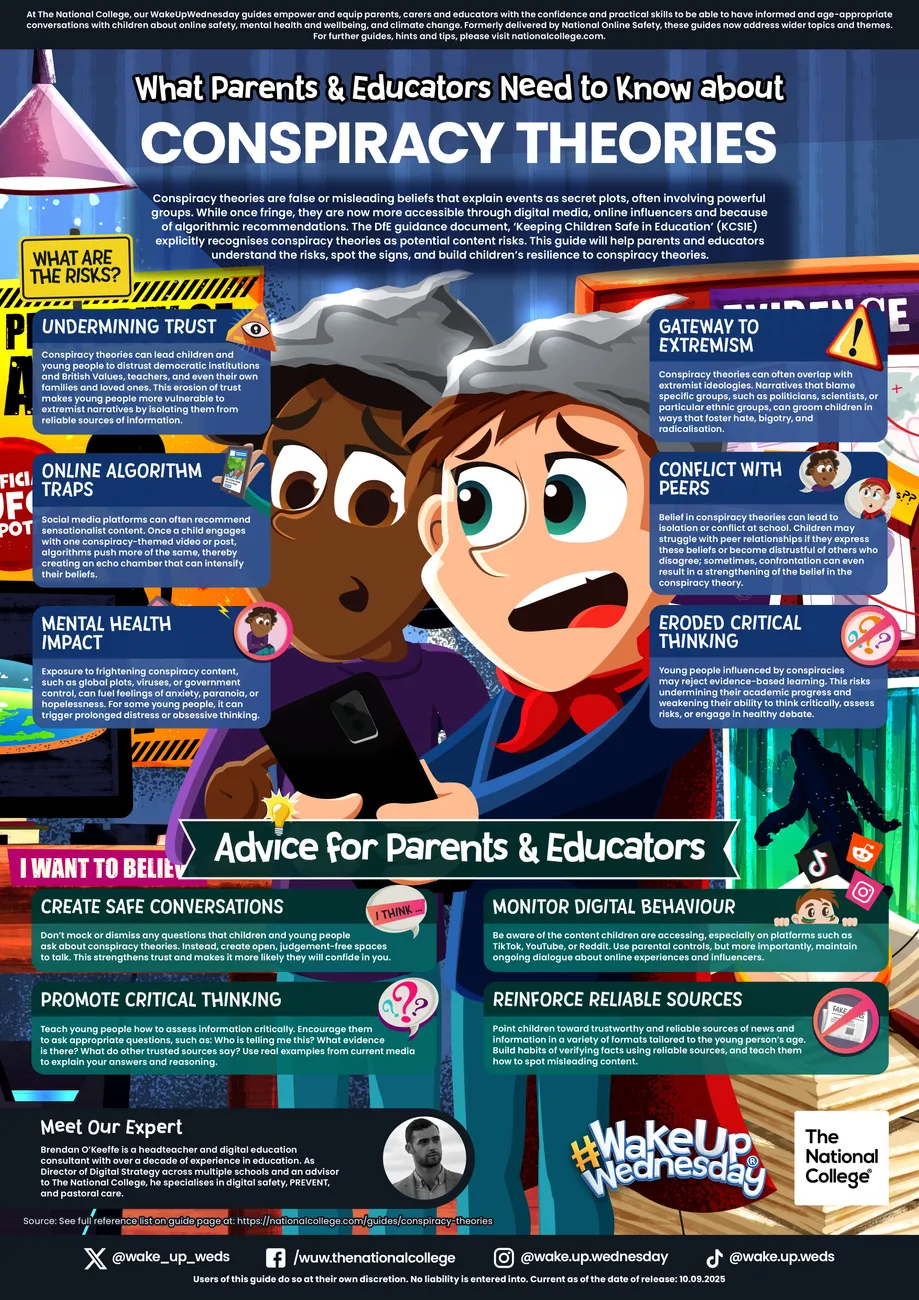
Conspiracy Theory
The latest update to ‘Keeping Children Safe in Education’ includes clarification that misinformation, disinformation and conspiracy theories are recognised safeguarding harms. Although they might seem far-fetched, for many people they are very convincing – especially when presented by persuasive influencers or sensationalist videos online. This guide unpacks the risks, including isolation, anxiety, and exposure to extremist content, that can arise when conspiracies go unchecked.
It also highlights how conspiracy theories can erode critical thinking and trust in reliable sources – including schools, families, and the media. With practical advice for nurturing curiosity, encouraging scepticism, and safeguarding children’s digital experiences, this edition of Wake Up Wednesday helps adults to tackle tricky topics in a calm and confident manner.
3/09/2025
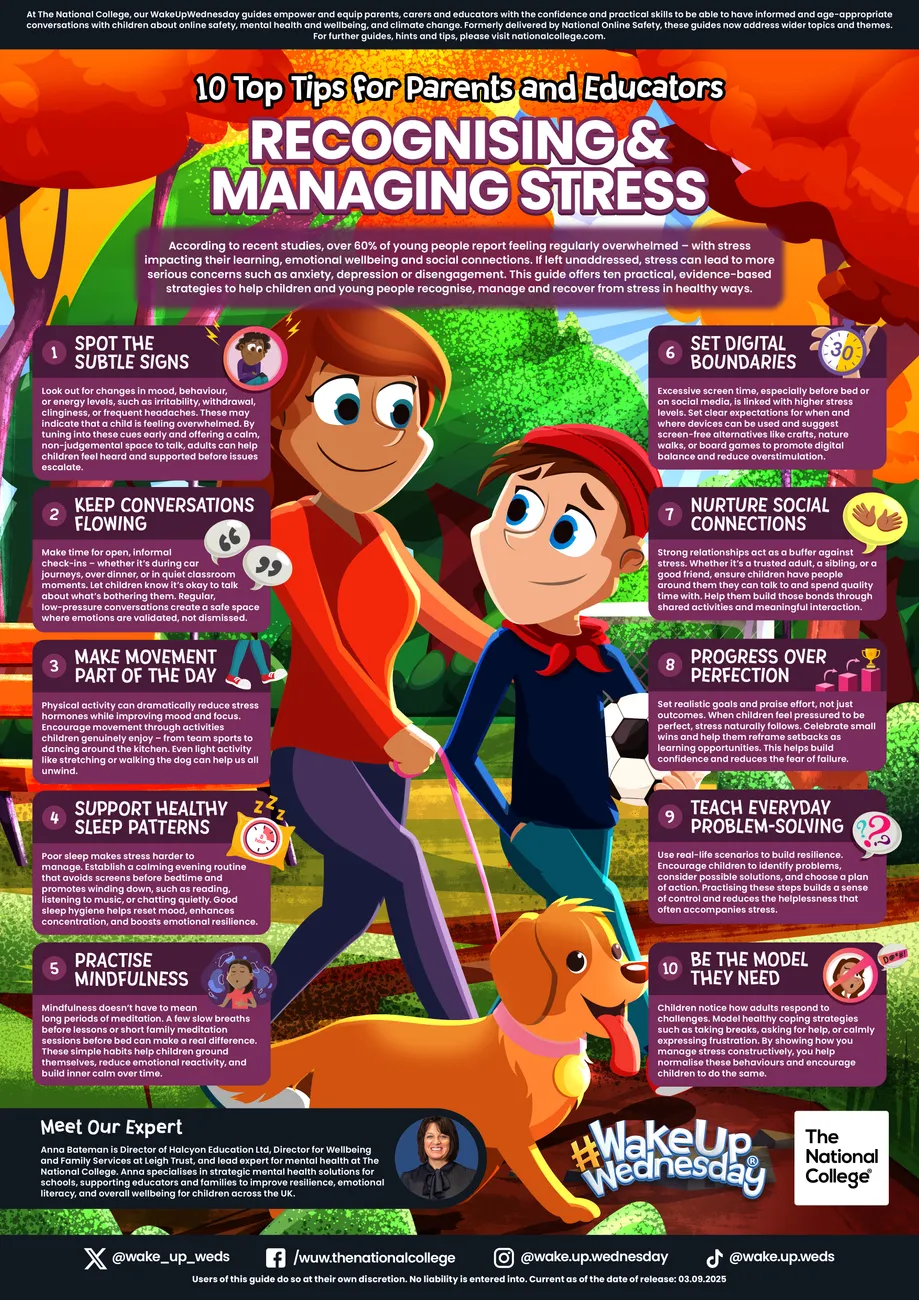
Recognising and managing stress
Stress is something we all experience – but for children and young people, it can feel especially overwhelming. This guide presents 10 simple, actionable strategies to help young people manage stress in a healthy and balanced manner. Whether it’s noticing early signs, encouraging open conversations, or modelling calm responses, there are plenty of ideas here to support positive change.
Perfect for both school and home settings, the guide equips adults to identify subtle signals of stress and create safe spaces for pupils to open up. It also suggests mindful habits and healthy routines that can become part of daily life, promoting long-term emotional strength and mental well-being.